Monday, May 1, 2023

What is SEO?

 So, you’ve started a website? Congratulations! Getting your own site is key to running a successful business in 2021. Now that your business is online, you may be coming upon some follow-up questions — like what is SEO?
what is seo_google starter guide_analytics that  profit  

As you research the next steps for your new website, you’re going to see the acronym SEO come up a lot. SEO stands for search engine optimization, and is a free practice that you can use to increase the amount of traffic to your website.


At first, using SEO might feel like a bit much. But, once you’re familiar with how it works and the benefits it adds to a site, you should feel more prepared to dive in. And, if you’re still hesitant, take comfort in knowing that there are experts who live and breathe SEO and can do the work for you!


How do search engines work?


Do you ever sit awake at night wondering how Google chooses the order of its search results? Well, get ready for a break in your insomnia because you’re about to find out!


Search engines like Google and Yahoo! rely on bots to scan every page of content on the internet. These bots — known as web crawlers — exist specifically for the purpose of indexing every page on the web. As the web crawlers make their way through the web, they search for new pages or pages that were recently updated. The crawlers automatically add each new page to a master list, which the search engine indexes.
 sitemap_what is seo_analytics that profit

In order to index each page, the search engine examines all the content it sees on the page, including photos, words, and video files. In this way, a search engine like Google can categorize a page in its index, and add it to a relevant search result.


But what makes a page relevant? And how does a tool like Google decide that one page is more relevant than another?


For Google specifically, the answer comes down to a collection of custom algorithms. One example is PageRank, which ranks a page based on the number of outside links that direct to that page. In other words, more links to your page can earn you a higher ranking on Google.
 on page seo_analytics that profit

Algorithms look at things like location, quality, and relevance. In order to determine the relevance of a page, search engines look at keywords. In order to determine the quality of a page, search engines look at the number of outside links referring to the page. The ranking process has many signals that decide on a page’s ranking. Learning these and taking advantage of the way they work is key to SEO.


A closer look at SEO


As the name suggests, the practice of SEO helps you optimize the search engine algorithms in order to earn higher rankings for your site. Search engines generally keep their algorithms a secret. Fortunately, there are people who have devoted entire careers to understanding SEO, and who have shared valuable information for businesses and website owners to use.


Not all ranking factors are equally effective, but they all do a little to increase your website’s visibility on a search result. One of the biggest keys to SEO is related to the PageRank algorithm. Pages that have lots of trusted links pointing back to them from other websites will rank higher. Unfortunately, this factor is one of several off-page SEO elements, meaning it’s controlled outside of your website. Off-page SEO — which also includes social media referrals — can be difficult to influence.

 Is Google My Business part of your SEO strategy?

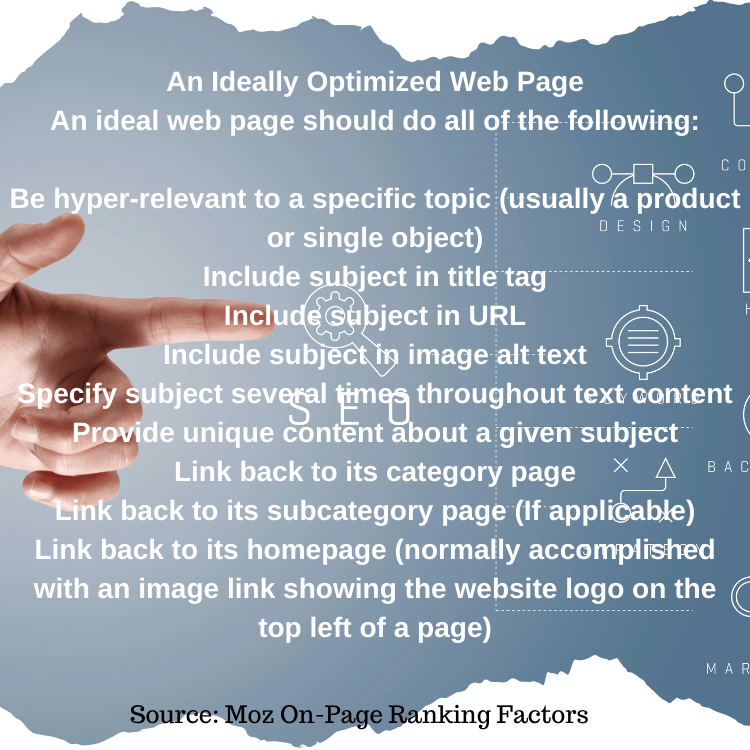
On-page SEO is easier to control and still goes a long way in improving the ranking of a website. This includes everything from the quality of your website’s code and the speed of each page, to the structure of the website.


The most influential elements of on-page SEO have to do with the content on each page. A good SEO strategy plans for keywords in several contexts. Keywords are words that are commonly used by individuals when searching for sites similar to yours.

 SEO Strategy: What You Need To Know

Not only should keywords be used in the first paragraph of the text itself, but they should be found in the title tag, the ALT tag, the URL, and the meta description. The search engine reviews all of these elements when it’s crawling and indexing.


Another on-page SEO factor is the length and quality of the content. The best length for SEO purposes sits between 300 and 1,000 words. Too few words won’t give the crawlers enough information.


Posting original content is also essential. It might be tempting to save time and copy some information that’s already out on the web somewhere. However, your page will be more engaging — and rank better on search engines — if you or someone else creates content specific for your page.


How to start using SEO


If you’re ready to optimize your website for higher search engine rankings, there are several ways to get started. You could continue your research online, and dive right in with keywords and fresh content. Or, you could use a program like Yoast, which has its own SEO plugin for WordPress, as well as SEO training courses.

If you are using HubSpot the Page Optimization tool is very useful.
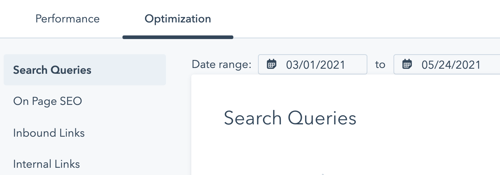
hubspot optimization tool for seo_analytics that profit

You can also use the SEO tool in HubSpot.
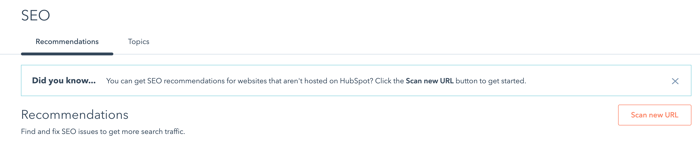
seo tool in hubspot_analytics that profit 

If you’re up for the challenge and have the time to spare, learning about SEO at your own speed and implementing changes on your own is totally doable.


When to hire an SEO expert


Although there are tons of resources online to help you get started with SEO, sometimes it’s best to hand the reins over to a professional. SEO experts know all the secrets to making your website more visible in search results. They can provide SEO audits to each of your web pages, help you develop effective content, perform keyword research, and provide helpful training and help you better understand SEO.


If you want to make the most of your site as soon as possible, or don’t have the time to spend on SEO training, there are plenty of professionals — including Analytics That Profit™ — that can take care of it for you.
schedule a time to talk


Wednesday, April 26, 2023

Why Some Businesses Avoid Using Benchmarks

 Businesses may be afraid to use benchmarks for several reasons:


  1. Fear of negative comparisons: Benchmarks compare the performance of one company to others in the same industry. If a business performs poorly compared to its competitors, it may fear negative publicity or investor reaction.


  1. Lack of data: Some businesses may not have access to reliable industry data or may not know how to collect it. Without this data, it can be challenging to accurately benchmark performance.


  1. Difficulty in defining relevant benchmarks: It can be difficult to choose the right benchmarks that accurately reflect a business's operations and industry. Selecting irrelevant or inappropriate benchmarks can lead to misleading results.


  1. Fear of losing competitive advantage: Some businesses may be hesitant to disclose too much information about their operations and performance, fearing that competitors could use this information to gain an advantage.


  1. Perceived high cost and complexity: Implementing benchmarking processes may require significant time, resources, and expertise, which may deter businesses from pursuing it.


We get it!

We have created benchmarks where data from data sources is securely pulled from the data source, anonymised and is not shared with anyone.

Your competitors cannot see your data and you cannot see theirs.

Did we mention they are free!

benchmark_databox_click through rate-Analytics That Profit (6)

Benchmarks are a common tool used by businesses to measure their performance against industry standards or competitors. However, some companies may shy away from using benchmarks due to concerns about being compared to others and potentially falling short. In this article, we'll explore why some businesses may not like benchmarks and the potential drawbacks of avoiding them.


What are benchmarks and why are they important?

Benchmarks are standards or reference points used to measure and evaluate performance.

 Benchmarks can help businesses identify areas for improvement, set realistic goals, and track progress over time.

By using benchmarks, businesses can gain valuable insights into their performance and make data-driven decisions to improve their operations.


The fear of being compared to competitors.

One reason why some businesses avoid using benchmarks is the fear of being compared to their competitors.

However, it's important to remember that benchmarks are not meant to be used as a tool for competition, but rather as a tool for improvement.

By identifying areas where you can improve, your businesses can work towards achieving their goals and ultimately, outperform your competitors.

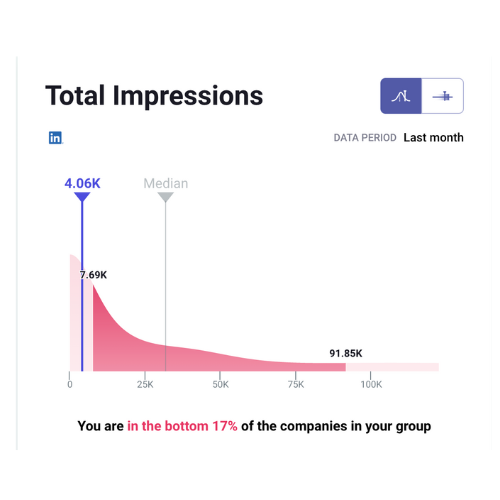
automotive supply chain marketing metrics benchmark_LinkedIn_Analytics That Profit

The benefits of using benchmarks.

Despite the fear of being compared to competitors, using benchmarks can have many benefits for businesses.

Benchmarks provide a clear understanding of industry standards and allow businesses to identify areas where they can improve their performance.

Benchmarks can help businesses make informed decisions about resource allocation and investment, leading to more efficient and effective operations.

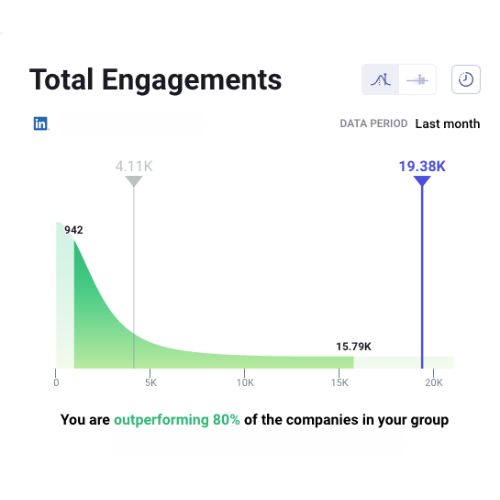
benchmarks for business_linkedin_analytics that profit


How to use benchmarks effectively.

To use benchmarks effectively, businesses should first identify the key performance indicators (KPIs) that are most relevant to their industry and goals. These KPIs could include metrics such as revenue growth, customer satisfaction, or employee productivity.

Once these KPIs have been identified, businesses can research industry benchmarks and compare their own performance to these standards.

By setting realistic goals based on benchmarks and continuously monitoring progress, businesses can improve their performance and achieve greater success.

benchmarks for business_google ads_analytics that profit (1)

Overcoming the fear of using benchmarks.

While benchmarks can be a valuable tool for measuring business performance, some companies avoid using them due to fear of being compared to competitors. 

Approach benchmarks with an open mind and a willingness to learn and grow, rather than a fear of being compared to others.benchmarks for business_page position_google search console_analytics that profit (1)

Competitor benchmarks can provide you with some insights into how your marketing efforts are performing relative to your competitors.

They may not necessarily tell you whether your marketing is working or not.

Benchmarking involves comparing your performance against that of your competitors or industry standards. By doing so, you can identify areas where you're doing well and areas where you could improve.

For example, you could compare your website traffic, social media engagement, or email open rates to those of your competitors.

If your metrics are better than your competitors, that could be a positive sign that your marketing efforts are working well. 

Benchmarking doesn't tell you whether your marketing is driving the results you want to achieve.

To truly understand whether your marketing is working, you need to have clear goals and metrics in place.

These should be specific, measurable, and tied to business outcomes such as revenue or customer acquisition.

By tracking your progress against these goals, you can determine whether your marketing is driving the desired results.

Competitor benchmarks can be a useful tool to assess your performance relative to your competitors.

In order to truly understand whether your marketing is working, you need to have clear goals and metrics in place that are tied to business outcomes.

schedule a time to talk

Thursday, November 4, 2021

Using OKRs to Improve Your Small Business Digital Marketing

 The success to any marketing effort begins with a solid measurement plan. If you don't know where you are going, how will you know when you get there?

When it comes to digital marketing for small business, we really like to use the information provided by Google Analytics to develop a measurement plan. If you are not familiar with Google Analytics, you need to know that it is free and easy to install on your website. Don't know know if you have it? Schedule A Time To Talk.

How do you develop a measurement plan? Watch this video from Google.


Once you have decided what to measure, one stumbling block is having a simple and easy-to-use methodology to know if you are on track with your measurement plan. OKRs help make your measurement plan easy to understand by all stakeholders.


What Are OKRs in digital marketing?

John Doer, the author of Measure What Matters, is well known for his implementation of OKRs with companies like Google and Intel.

OKRs = Objectives and Key Results

If you are familiar with PDCA (Plan, Do, Check, Act) from the quality world, OKRs will seem very intuitive. The concept is simple. If you can't measure it, you can't manage it. If you can't manage it, you can't improve it. These basic principles can be traced back to W. Edwards Deming and Walter Shewart for developing and championing this PDCA model.

The PDCA cycle-- Plan, Do, Check, Act-- has no end. It is a continuous improvement cycle you should always be evaluating  for effectiveness.


OKRs provide a framework for the PDCA model in alignment with overarching company goals and initiatives. Objectives are what you want to accomplish and Key Results are how you will get them done. This approach allows you to clearly articulate what you are looking to improve and how you will know it has been improved. The Key results should be stretch goals, meaning if you are easily and consistently reaching 100% Key Result success rate, then you are setting the bar too low.


Using Objectives to improve your digital marketing

A common problem that most businesses face are multiple initiatives occurring at the same time and not knowing what to focus on. My first job was at the University of Kentucky and I remember the inter office mail folders arriving on my desk. These folders contained the various initiatives that had been launched. One big problem I had as someone new to such a large organization was trying to figure out what was important and what impact I was supposed to have.  I remember being reprimanded by my manager for not accomplishing a specific initiative. I brought a folder that contained all the initiatives with me to the follow-up meeting. I asked what I thought was a fair question: Which one of these is the most important? That did not go over so well- but it was a fair question. If you do not have a clear focus and a defined outcome, how do you know if you are making progress?

Fast forward many years and I read a book called The 4 Disciplines of Execution. One aspect of their approach that resonated with me was the amount of case studies that showed the effectiveness of the PDCA (plan-do-check-act) cycle. While they used the terms, 'WIG' (Wildly Important Goal), 'Lead Measures', 'Scoreboard', and 'Cadence of Accountability', the concept is a refresh of PDCA from Quality 101. You might want to read PDCA: The 4 Steps of Effective Marketing.


Objectives should be so clear the everyone in the organization knows exactly what they are supposed to do.


The data from the research in The 4 Disciplines of Execution shows that the more initiatives you have, the less you will accomplish. Key Results should use the X to Y by When method.

Key Results - if you don't measure it, you won't know if you have improved your marketing

We really like the principles outlined in the 4 Disciplines of Execution.

Simply Put: X to Y by When.

This eliminates any ambiguity and follows the SMART goal methodology. Set wildly important goals (WIGs) to focus your priorities. Limit yourself to 1 or 2 Wildly Important Goals. The more goals you set, the less you will accomplish (The research included in the book clearly shows this to be true). The Pareto principle holds true. 20% of your activity will produce 80% of your results. Understand the difference between a Lead and Lag measure. Lag measures are the results of your goal. Lead measures are the jobs to be done to accomplish your goal.

"A common example of a lag measure is weight loss. Which activities or lead measures will lead to weight loss? Diet and exercise! Proper diet and exercise predict the success of weight-loss and they are activities that we can directly influence. Simple enough, but be careful. Even the smartest people fall into the trap of fixating on a lag measure that they can’t directly influence. This is because lags are easier to measure and they represent the result we ultimately want. Think of a lead measure as a level that moves your wildly important goal."

Source:https://www.franklincovey.com/thcie-4-disciplines/displine-2-act/


Measure What Matters

How do you know what to measure?

There are two contrarian approaches to use when determining what to measure. Amplify success or correct failures. If it ain't broke, you don't need to fix it or If you don't know what is broken, you won't know what to fix.

Sounds simple enough, right? I don't know about you, but it seems many companies get lost in the weeds with data and miss what I strongly believe are the two most important areas of focus.

Does it improve customer satisfaction? 

Does it impact revenue/profit?

One small business owner I was working with had set a goal of more social media likes. As is my habit, I asked why?

Crickets. They were not sure, so I asked if they had seen a relationship between social media likes and revenue. They were not sure because this was something they had not measured. As a follow up question, I asked if they had looked at Google Analytics to see the influence social media had on revenue generation and customer retention and was it part of their attribution model? Likes may very well lead to revenue generation, but you need the supporting data to make the business case. No guesses or gut feelings. Start with data.

You need to measure what matters. This takes time, research, thought, and input from stakeholders. As you think about your continuous improvement process, a good place to start is customer complaints. What impact do customer complaints have on retention? Customer Lifetime Value? Focus on revenue generation in the near- and long-term.

Measure what negatively impacts your business.

Measure what positively impacts your business.

Example:

As you evaluate your marketing, you discover that your best customers follow a distinct path. It may be that they download a specific white paper and 3 days later submit an RFQ. As you evaluate Customer Lifetime Value, you determine that visitors to your website from organic content convert at a higher rate. This data is yelling at you. Be quiet and listen. Don't look for what is not there. Instead, pay attention to what is there.

Where to Start with OKRs for Small Business Marketing

Let's start with your website. We strongly recommend you use Google Analytics to set goals for your website. Here is an idea, this could be your first OKR!


There you have it. Your first use case using OKRs to improve your digital marketing!

Your goal would look something like this in Google Analytics.


You can also have parallel Key Results with a single Objective.


You probably noticed we introduced a Key Result success %. This is an effective method to measure your progress. 

If you quickly and easily get 100%, then you need to set your goal higher- a stretch goal.


Now take the same Objective we used above and go into greater detail.


It is common practice to set next year's goals at the end of a current year, but OKRs can and should be used as part of your continuous improvement process. Not sure where to start? We are here to help.


Kick-Start Your Marketing by Creating a Custom Service Audit Package from the Following Offerings:

Website Audit

Technical SEO Audit

Topic Cluster Research

Google Analytics Audit

Competitive Analysis

Keyword Research


Tuesday, December 8, 2020

Managing your digital footprint to improve SEO

I recently had the opportunity to work with a well-known SME (Subject Matter Expert) who needed to evolve their marketing. In the past, they were so well-known their calendar was full of keynote speaking engagements. The overnight metamorphosis to virtual meetings changed everything. The big events were gone. These opportunities seemed to have evaporated. A quick evolution to digital marketing was necessary. A quick internet search for them was puzzling. None of the information was congruent; different phone numbers and addresses, their personal images were not the same...you quickly became confused. Was this the person I was looking for? Their digital footprint was a mess.


What is a Digital Footprint?

digital footprint_SEO_analytics that profit


Your digital footprint is a collection of all the information about you available to search engines. This includes promotions of speaking engagement and appearances, as well as social media, links to content you have published, and we cannot forget reviews. When was the last time you searched your name and brand to look at your digital footprint?

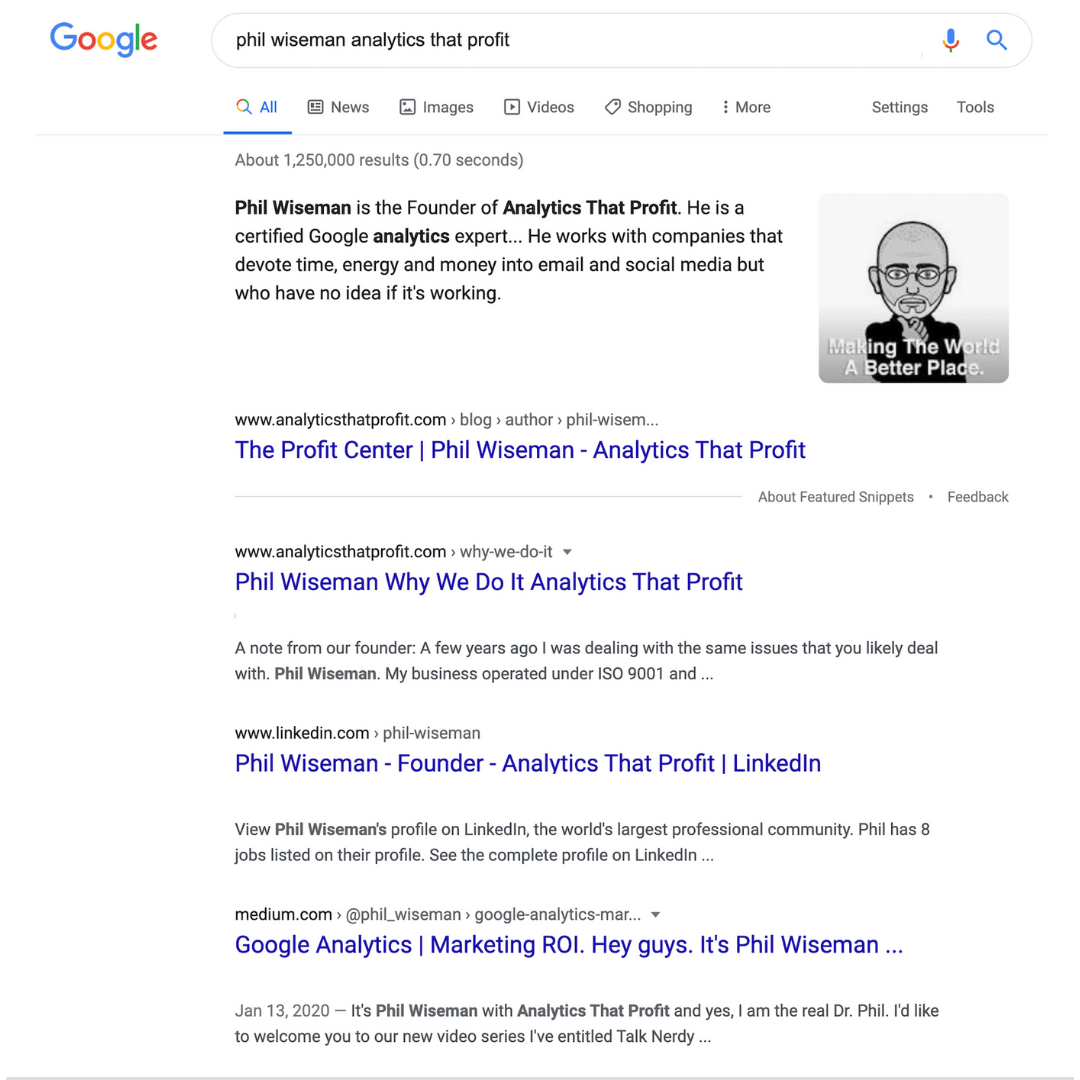
phil wiseman_analytics that profit_digital footprint


The image above is the first page of search results for my digital footprint. I was aware of the footprints above; however, as I scrolled into pages 3 and 4 of search results I found listings that were not set up by me! Your digital footprint can contain information that you did not specifically provide.

Search your name and brand and see what shows in search.  


How does your digital footprint impact SEO?


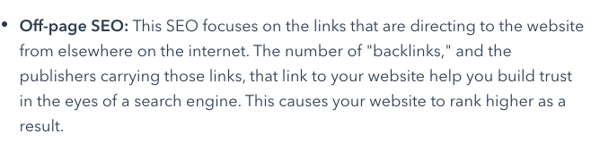
When you are performing an internet search,  there is no filter that says, "Only show me stuff that this person has authorized." If you know of one, please share in the comments section. Your digital footprint is part of Off-page SEO. This simply means information NOT on your website but has links back to your website.

off page seo_ hubspot_analytics that profit

Source: How to Create an SEO Strategy for 2020

Why is this important? When you are creating a profile for social media or joining an organization that will share your information, such as a trade association, you want the information to be congruent. Donald Miller of StoryBrand says it best, "If you confuse, you lose."

Social SEO shares these ideas in their article, Your Digital Footprint: Analyze and Maximize for Better Results.

The first step to creating a strong and effective digital presence is analysis. Answer these questions to gain valuable insight into your online marketing strategies:

  • What are the major components of my digital footprint? The easiest way to find this answer is to put your business name into a major search engine. Look at the first page of results. Is your own website one of the first results or is the page filled with review sites and social media pages?
  • How is my business represented on the internet? Take a look at a few of the 3rd party sites that mention your business. Are your ratings good? What do customers say?
  • Is my message consistent? Do your blogs, web pages, and advertisements all say the same thing? Is there old or incorrect information in circulation?
  • Does my digital footprint show my business in the best possible way? Use this step to define what it is you want internet browsers to see when they encounter your brand’s name. Does your current online presence support that?
  • Is my metric-tracking method working? If you aren’t collecting data on what your customers are doing, you’re missing out on some huge opportunities. Fine tune your data collection and analysis routines to get the most out of every online campaign.

These questions help you define what potential customers see when they find your business on the internet. The next steps show you how to shape that picture into a flattering vision.


How do you improve SEO with your digital footprint?

Start with what you can control first. This would include any platform for which you have a login.

Keep it simple.

Logo- I am NOT a graphic artist so I leave this to the professionals. Have a professional logo that is sized correctly for all platforms. 

Pictures- I am NOT a professional photographer. Spend the money and have proper headshots that can be used. Don't forget to use Image Alt text on Logos and Pictures.

Banners and Cover images- LinkedIn, Twitter, and Facebook allow you to customize your banners and covers. Be consistent. While there are a million options, inconsistent images just lead to brand confusion. We really like to use Canva as they have a simple drop down for you to select for these platforms and you can create a Brand Kit so you don't have to guess about colors and fonts. Be consistent.

Bio- Use the same bio for promotion of speaking engagements as the bio on your website. 

Brand Promise- Once again, if you confuse you lose. Make sure your brand promise is the same across all platforms.

brand promise_analytics that profit

Contact Information- This may seem obvious, but look closely at your address, phone number, and website links. Make sure they are correct. 

Reviews- If you are like me, I look at reviews before I contact a business. Maybe it is just my personality, but I look at negative reviews first. I want to know how a business handles customer complaints. Google My Business is one of the more common platforms for business reviews. Many businesses are surprised to know that they even have this business profile. Make sure you have claimed your business profile and manage your reviews.


Your digital footprint is significant for Off-Page SEO.

Moz offers keen insight into Off-Page SEO.

What is off-page SEO?

"Off-page SEO" (also called "off-site SEO") refers to actions taken outside of your own website to impact your rankings within search engine results pages (SERPs).  

Optimizing for off-site ranking factors involves improving search engine and user perception of a site's popularity, relevance, trustworthiness, and authority. This is accomplished by other reputable places on the Internet (pages, sites, people, etc.) linking to or promoting your website, and effectively "vouching" for the quality of your content.

At a high level, improving the "off-page SEO" of a website involves improving search engine and user perception of a site's quality. This happens by getting links from other sites (especially those that are reputable and trustworthy themselves), mentions of your brand, shares of your content, and "votes of confidence" from sources outside of your own website.

Why Using AI Tools Doesn’t Make You an Expert

  Using AI tools doesn’t make you an expert—any more than looking at your own CT scan makes you a radiologist. It just means you’re holding ...