
Showing posts with label Content. Show all posts

Monday, May 19, 2025


How to Find Out Who Is Visiting Your Website-Analytics That Profit
  • May 19, 2025

If you’re a business owner who isn’t a website expert, you might wonder: “Who’s visiting my website, and why does it matter?”

Let’s break down how you can find out, using simple language and practical tips to help your business get found online.

Why Knowing Your Website Visitors Matters

Understanding your website traffic isn’t just for techies. It’s about getting to know your potential customers, so you can turn more visitors into paying clients.

When you know where your visitors come from, what they’re interested in, and how they interact with your site, you can:

  • Improve your marketing strategy
  • Make your website more user-friendly
  • Increase your sales and leads
  • Spend your advertising budget more wisely

Think of website analytics as your digital “customer counter.” It’s like having a tool that tells you how people found your business, what pages they liked, and where they left.

This information is gold for small business owners who want to grow.

What Can You Learn About Your Website Audience?

Website analytics tools, like Google Analytics, help you answer questions such as:


Where are my visitors located? (city, state, or country)
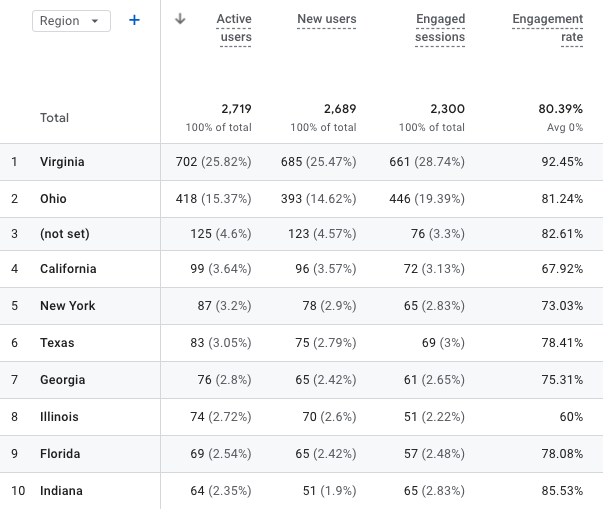
using google analytics to inderstand where website visitotrs are located-analytics that profit

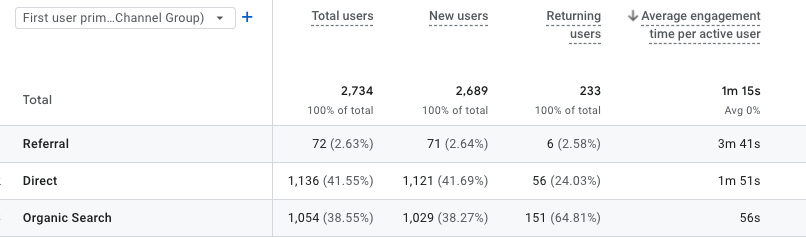
Are they new or returning customers?


What devices are they using? (mobile, desktop, tablet)
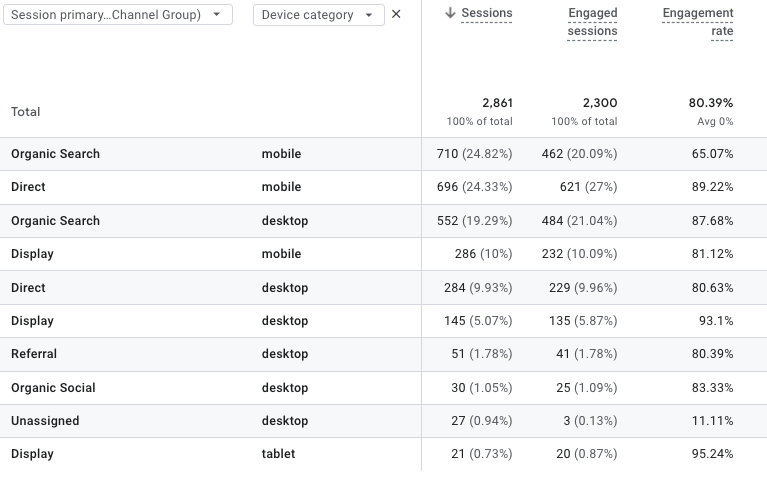
who is visiting my website on mobile phones- analytics that profit


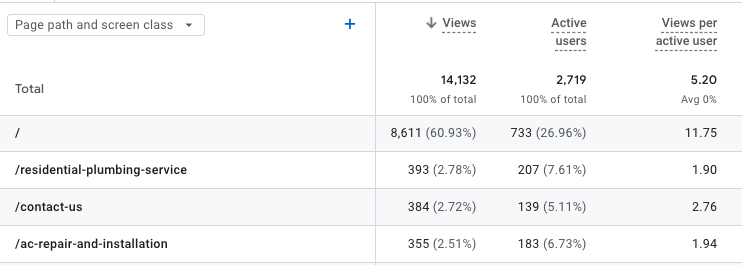
Which pages are most popular?

what pages are popular on my website-analytics that profit


How long do people stay on my site?

how long do people stay on my website_analytics that profit


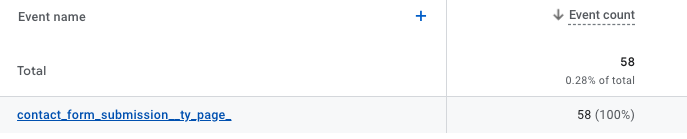
What actions do they take? (calls, form submissions, purchases)
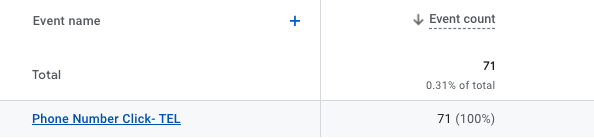
who clicked the phone number on the website-analytics that profit

how many people completed the contact form on my website_analytics that profit


You can spot trends and make smarter decisions by looking at these details. For example, if you notice most visitors are from your local area, you can focus your marketing on that region.

If a certain page keeps people engaged, you might want to create more content like it.

How to Start: Setting Up Google Analytics

You don’t need to be a web developer to get started. Here’s how most business owners can set up website tracking:

  • Create a Google Analytics account (it’s free).
  • Add your website as a “property.”
  • Install the tracking code on your site. 
  • Check your dashboard to see your website data.
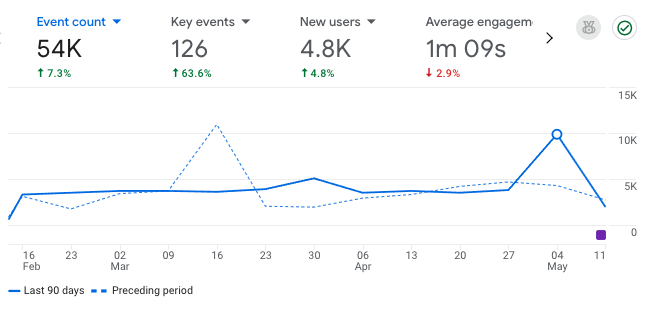
google analytics website overview-analytics that profit

If this sounds overwhelming, don’t worry.  Analytics That Profit can set this up for you quickly and correctly.


Key Website Metrics Every Business Owner Should Know

Here are some important numbers and related terms to watch:

MetricWhat It Tells YouWhy It Matters
Users/VisitorsHow many people visit your siteShows your reach and growth
SessionsTotal visits (one person can have multiple)Measures engagement
Bounce Rate% who leave after one pageA high rate may mean your content isn’t relevant or your site is hard to use
Traffic SourcesHow people found you (Google, social, direct)Helps you focus your marketing efforts
New vs. ReturningFirst-time vs. repeat visitorsIndicates loyalty and content quality
Average Session DurationHow long do people stayLonger time usually means more interest
Conversion Rate% who take action (call, buy, sign up)The ultimate measure of website success: Using Analytics to Grow Your Business


Once you know what’s happening on your website, you can take action:

Improve your content: If certain blog posts or service pages get lots of views, create more like them.


Fix problem areas: If people leave quickly (high bounce rate = Low Engagement), check if your site loads slowly or your message is unclear.


Target your marketing: If most visitors come from Facebook, focus your ads there. If they come from Google, invest in SEO and local search.


Track phone calls and forms: Set up “events” in Google Analytics to see when people click your phone number or fill out a contact form.


Tips for Accurate, Useful Data

Filter out your own visits: Exclude your business’s IP address so your team doesn’t skew the numbers.


Check your analytics regularly: Set aside time each month to review your website stats.


Set clear goals: Decide what you want your website to do (e.g., get calls, book appointments, sell products), and measure progress.


What Are LSI Keywords and Why Should You Care?

LSI keywords (Latent Semantic Indexing keywords) are simply words and phrases related to your main topic. For example, if you run a bakery, LSI keywords might include “fresh bread,” “wedding cakes,” “local bakery,” or “order pastries online.”

Using these related terms naturally in your website content helps search engines (like Google) understand your business and match you with more potential customers.

How to use LSI keywords:

  • Write about your services and products using different but related words.
  • Answer common questions your customers ask.
  • Include location-based terms if you serve a local area.

This approach helps your website show up in more searches and makes your content easier for real people to read.


Final Thoughts: Make Website Analytics Work for You

You don’t need to be a tech expert to benefit from website analytics.

By understanding who visits your site and how they interact with your business online, you can make smarter decisions, attract more customers, and grow your business.

Contact Analytics That Profit if you need help setting up analytics, understanding your website data, or using LSI keywords to boost your online presence.

We’re here to help you turn website visitors into loyal customers, without the jargon or confusion.

Monday, July 31, 2023

Is Domain Authority More Important Than Content on Your Website?

    Domain authority refers to the overall strength and credibility of a website's domain based on factors such as the number and quality of backlinks, the age of the domain, and other technical factors.

A high domain authority can help a website rank higher in search engine results pages (SERPs) and attract more traffic.

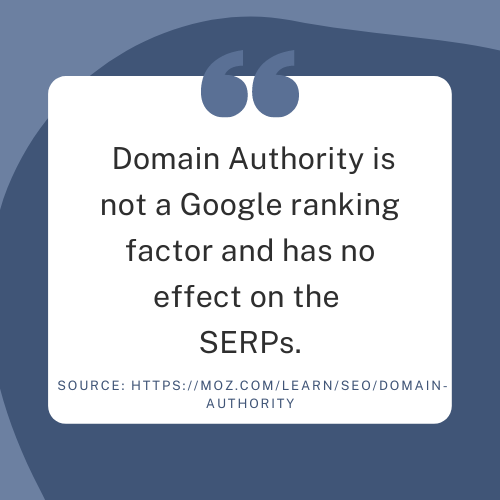
Domain Authority is not a Google ranking factor and has no effect on the SERPs_analytics that profit.

On the other hand, content is the primary reason why people visit a website.

High-quality content that is informative, engaging, and relevant to the target audience can help a website attract and retain visitors, build trust and authority, and ultimately convert visitors into customers or subscribers.


So, while domain authority can help a website attract more traffic and rank higher in SERPs, the content keeps visitors engaged and satisfied. In other words, domain authority is a means to an end, while content is the end goal.

Domain authority and content are important in different ways and for different reasons.

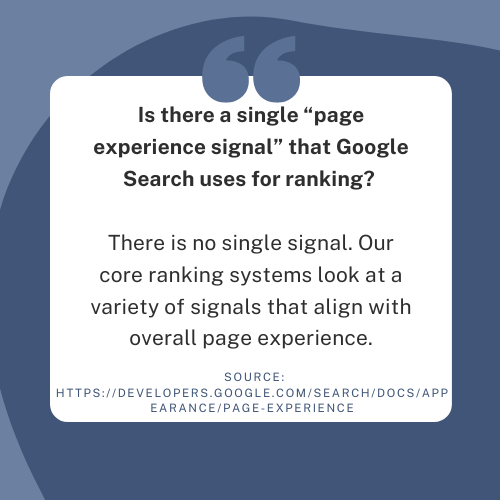
Is there a single “page experience signal” that Google Search uses for ranking_analytics that profit

When building a successful website, there are many factors to consider.

One of the most debated topics is whether domain authority or content is more important. While both are crucial for a website's success, understanding the differences and how they impact your site can help you make informed decisions about your online presence.


Understanding Domain Authority.

Domain authority is a metric developed by Moz that predicts how well a website will rank on search engine result pages (SERPs).

It considers factors such as the number and quality of backlinks pointing to a website, as well as the overall trustworthiness and authority of the website.

A higher domain authority score indicates that a website is more likely to rank higher on SERPs, which can lead to increased traffic and visibility. However, it's important to note that domain authority is just one of many factors that search engines use to determine rankings, and it's not a guarantee of success.


The Importance of Quality Content.

While domain authority is important for ranking on search engines, it's not the only factor that matters. Quality content is also crucial for attracting and retaining visitors to your website.

Content that is informative, engaging, and relevant to your audience can help establish your website as a trustworthy source of information and increase the likelihood of visitors returning in the future.

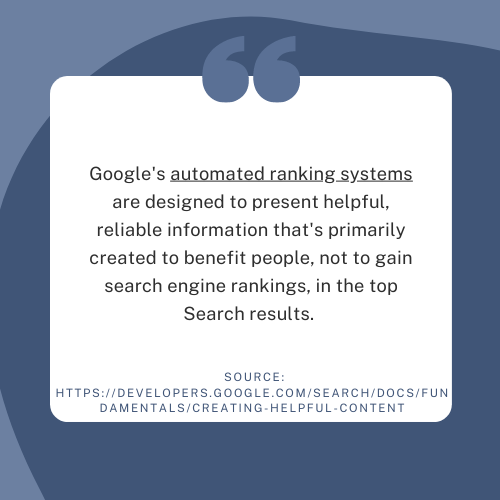
Creating helpful, reliable, people-first content_ analytics that profit

High-quality content can also attract backlinks from other websites, further improving your domain authority and search engine rankings.

A balance of domain authority and quality content is necessary for a successful website.

How Domain Authority and Content Work Together.

Domain authority and content are both important factors for the success of your website. While domain authority helps your website rank higher on search engines, quality content is crucial for attracting and retaining visitors.

By creating informative and engaging content, you can establish your website as a trustworthy source of information and increase the likelihood of visitors returning in the future.

High-quality content can also attract backlinks from other websites, further improving your domain authority and search engine rankings. A balance of domain authority and quality content is necessary for a successful website.


Strategies for Improving Domain Authority and Content.

Improving your domain authority and content can be achieved through various strategies.

To improve your domain authority, focus on building high-quality backlinks from reputable websites, optimizing your website for search engines, and consistently producing valuable content.


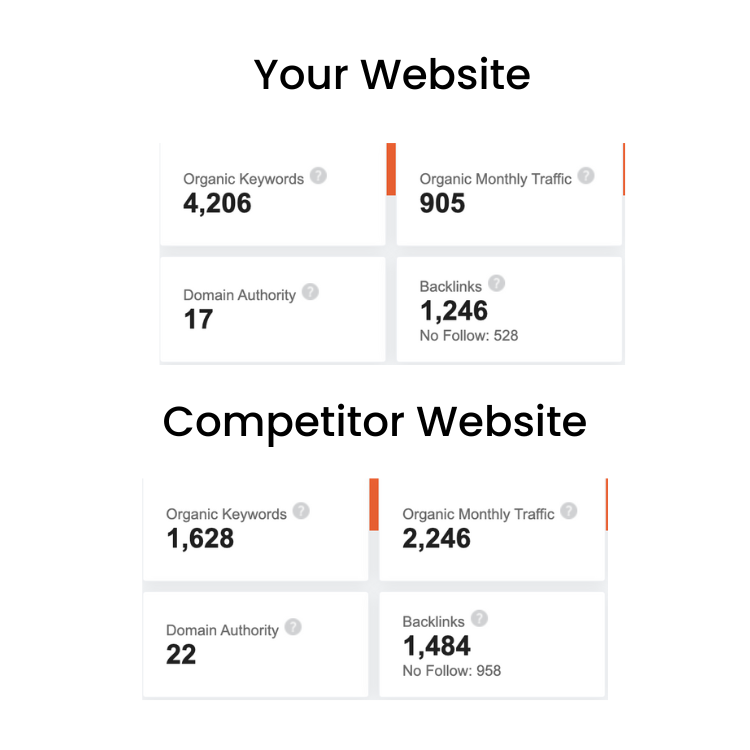
Only compare websites that are relevant to your marketing vertical!


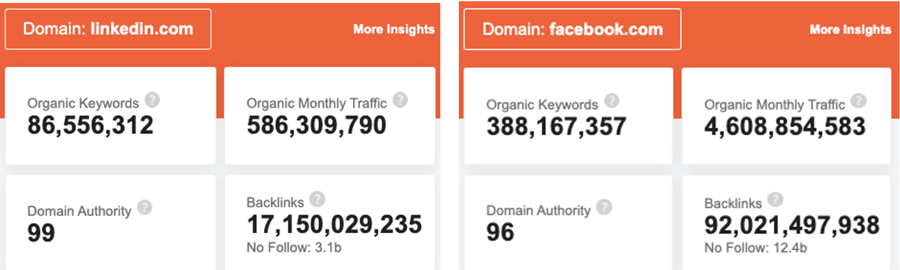
Since DA is based on machine learning calculations, your site's score will often fluctuate as more, fewer, or different data points become available and are incorporated into those calculations. For instance, if facebook.com were to acquire a billion new links, every other site’s DA would drop relative to Facebook’s. Because more established and authoritative domains like Facebook will have increasingly larger link profiles, they take up more of the high-DA slots, leaving less room at the higher end of the scale for other domains with less robust link profiles. Therefore, it's significantly easier to grow your score from 20 to 30 than it is to grow it from 70 to 80. For this reason, it’s important to use Domain Authority as a comparative metric rather than an absolute one.

Source: Moz

Domain Authority comparison_analytics that profit

To improve your content, thoroughly research your target audience and their interests, create informative and engaging content, and use visuals and multimedia to enhance the user experience.

These strategies can improve your domain authority and content, leading to a more successful website.


Both Domain Authority and Content Matter.

While domain authority and content are both important for the success of your website, it’s important to remember that they work together.

A high domain authority can help your content rank higher in search engine results, while high-quality content can attract more backlinks and improve your domain authority.

Focusing on domain authority and content can lead to a more successful website that attracts more traffic, engages users, and achieves your business goals.

Why Using AI Tools Doesn’t Make You an Expert

  Using AI tools doesn’t make you an expert—any more than looking at your own CT scan makes you a radiologist. It just means you’re holding ...